A First Courtyard Reset for the Start of Spring
A first courtyard reset helps you notice what needs attention, clear only the clutter that matters, and choose one planting idea that fits the space.
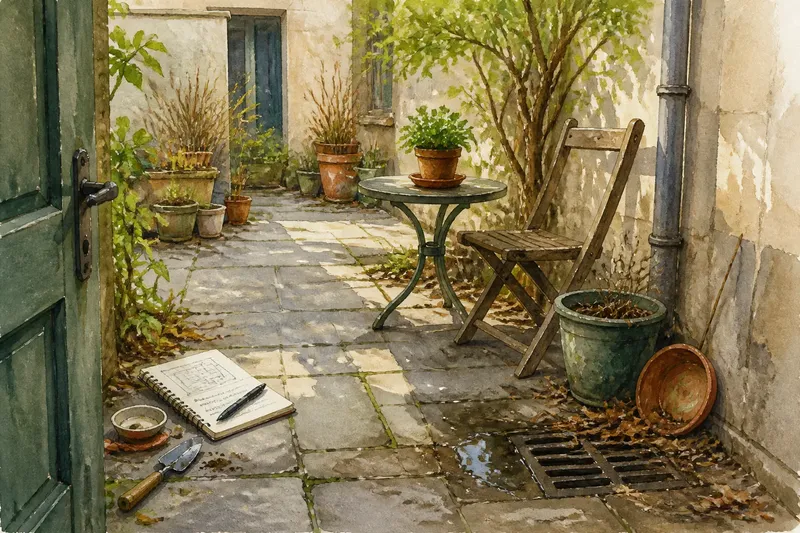
On a cool spring morning, a courtyard can look busy before anything has grown: a tipped saucer, dry stems in a pot, leaves caught by the drain, and a chair pushed against the wall. A first courtyard reset is less about making the space spotless than about noticing what the season has changed and choosing one useful next move.
Work in a calm sequence. Pause, observe, clear selectively, then decide what to plant. The order matters: it keeps a small garden from becoming a collection of chores before you know what it needs.
1. Look at the courtyard before moving anything
Stand at the entrance and take in the whole space. Notice where sunlight reaches at different times of day, where rainwater tends to collect, and which corners feel exposed to wind. A courtyard’s conditions can shift sharply between a sunny patch beside a wall and a shaded spot under an overhang.
Then look closer. Check the surface of pots, the spaces beneath benches, the edges of paving, and any narrow route you use to carry watering cans or take out rubbish. You are looking for useful clues, not a reason to rearrange everything. A damp patch may point to a blocked drain or a leaky container; a dry, brittle stem may simply belong to a plant that has gone dormant.
Make a short note on paper or in your phone. Write down what gets sun, what stays damp, and what obstructs an everyday task. Keep the observations separate from the solutions for now.
A quick look at the courtyard from its entrance can reveal more than a hurried sweep.
2. Decide what counts as necessary clearing
Spring clearing does not require removing every fallen leaf or cutting every bare stem. Some material may still shelter small creatures or protect soil from drying. Begin with items that are clearly damaged, obstruct a route, cover a drain, or have become a place where water sits against a pot or wall.
Pick up loose litter and move empty containers that are in the way. Clear leaves from drain grates and check that water can run away freely, but do not dismantle drainage fittings or alter shared property. If a drain seems blocked beyond the surface, contact the person responsible for maintaining the courtyard.
For old plant growth, take a closer look before cutting. A stem that appears lifeless may have buds lower down, while a hollow, mushy, or broken section may be ready to remove. Use clean hand pruners for small stems, and set aside anything you are unsure about rather than making a broad cut. The plant’s label or care instructions can help with pruning timing.
- Remove loose rubbish and broken items that create a trip hazard.
- Clear the visible surface of a drain so rainwater can pass.
- Separate sound pots and tools from cracked or unusable ones.
- Leave uncertain stems in place until you can identify the plant’s needs.
- Keep any shared furniture or fixtures where the building’s arrangements require them to stay.
Clear only what is plainly obstructive, damaged, or unhealthy.
3. Check the basics before bringing in new plants
Once the obvious clutter is gone, inspect the places where plants already live. Look for cracked containers, saucers holding stagnant water, exposed roots, and soil that has pulled away from the sides of a pot. These details can affect how easily you care for the courtyard, so notice them before adding another container to the mix.
Check whether a pot can drain freely and whether its location allows you to water without splashing a neighbor’s doorway or making a walkway slippery. Do not assume that a dry-looking surface means a plant needs immediate water; feel the soil below the top layer, or use a clean wooden skewer to see whether it comes out damp. Consider the plant’s own care needs as well.
Also look at the practical route between the tap and the planting area. A narrow passage may become awkward if a watering can has to pass between chairs and pots. Moving one item a little can make routine care easier without changing the whole layout.
Choose a spot that is easy to reach before choosing what to put in it.
4. Choose one planting idea that suits the conditions
Let your notes guide one small planting decision. A sunny courtyard edge might suit a pot of culinary herbs, while a shaded corner could be better for a foliage plant selected for low-light conditions. In a spot that catches wind, a compact, sturdy plant may be easier to tend than a tall, top-heavy one.
Keep the idea modest enough that you can care for it alongside the plants already there. That might mean refreshing one container, sowing a short row of quick-growing leaves in a suitable planter, or adding a single flowering plant near a seating area. The aim is not to fill every bare patch. It is to give the courtyard one new point of interest that fits the light, access, and watering routine.
Say you notice that a small table receives gentle morning sun and is easy to reach from the tap. You could set a single pot of parsley there, choosing a container with drainage and placing a saucer beneath it where water will not run onto the paving. The expected visible result is a useful green accent beside the chair, with care concentrated in a spot you already visit.
Before buying a plant, check its label for light and watering preferences and consider how large it may become. In a shared courtyard, confirm any rules about containers, planting beds, or changes to common areas with the relevant manager or residents’ group.
5. Prepare the chosen spot without turning it into a project
Move aside only what the new planting needs. Wipe a tabletop, remove loose debris from one container, or shift a chair enough to make the route accessible. If the potting mix in a container is old, compacted, or contaminated, assess whether it should be refreshed rather than simply topping it up. Do not discard soil or plant material in shared areas unless that is allowed.
Use a small hand trowel, a clean pot, and fresh potting mix suited to the plant. Keep the work on a tray or newspaper if you want to collect spilled mix, and put tools away when you are done. A tidy work area makes it easier to stop at the point you intended instead of drifting into a full courtyard overhaul.
When planting, follow the plant’s label and avoid burying its crown or crowding it against the pot edge. Water as the plant’s instructions suggest, then place it where you observed the right conditions. Keep the container stable and out of the route people use.
6. Leave room to notice what changes
After the planting is in place, give the courtyard a little time before making another change. Notice whether the chosen spot stays damp after rain, dries quickly in sun, or is more exposed to wind than it seemed at first. These observations help you adjust care without adding new work or moving several plants at once.
You might make a simple note when you water: the date, whether the soil felt dry beneath the surface, and any visible change in the plant. The purpose is not to keep a formal log. It is to help you distinguish a recurring need from a one-off spell of weather.
If the plant looks stressed, check its light, drainage, and watering routine before deciding it needs a companion or a replacement. A single change at a time makes it easier to see what the plant responds to.
Let the first planting settle before adding another.
What should you do if the courtyard is still cold?
Should I plant as soon as spring begins?
Not necessarily. Check local frost conditions and the plant’s label, and wait if the species is sensitive to cold. You can still clear a drain, inspect containers, or prepare a sheltered spot while the weather is unsettled.
How can I tell whether a bare plant is alive?
Look for buds, flexible stems, or green tissue just beneath a small scratch on a woody stem. If you cannot identify the plant or are unsure where to prune, leave it intact and seek advice from a knowledgeable nursery or gardener.
What if I have no sunny place to plant?
Choose a plant suited to the courtyard’s actual light rather than trying to change the space. Some foliage plants tolerate shade, though the exact choice depends on how much natural light the spot receives.
How do I keep a shared courtyard reset considerate?
Keep access routes clear, avoid moving shared fixtures without permission, and collect loose soil and leaves from paving. If a change affects a common bed or structure, ask the people responsible for the space before proceeding.
Finish with a small, repeatable routine
A spring reset works best when it leaves the courtyard easier to use, not merely neater to look at. Put away the tools, return movable items to their places, and leave the drain and walking route clear. Then choose one simple task to revisit, such as checking the new pot’s soil before watering.
That is enough for a first pass. A few careful observations, a limited clear-out, and one well-placed planting idea can give you a more useful courtyard without committing you to a larger redesign. Keep the first courtyard reset modest, and let what you learn from the space guide the next decision.