A Pot Is a Tiny Climate: Why Container Size Changes the Growing Experience
Container size shapes root room, moisture, and care rhythm. Compare pot volume and shape before planting to choose a container that suits your space.
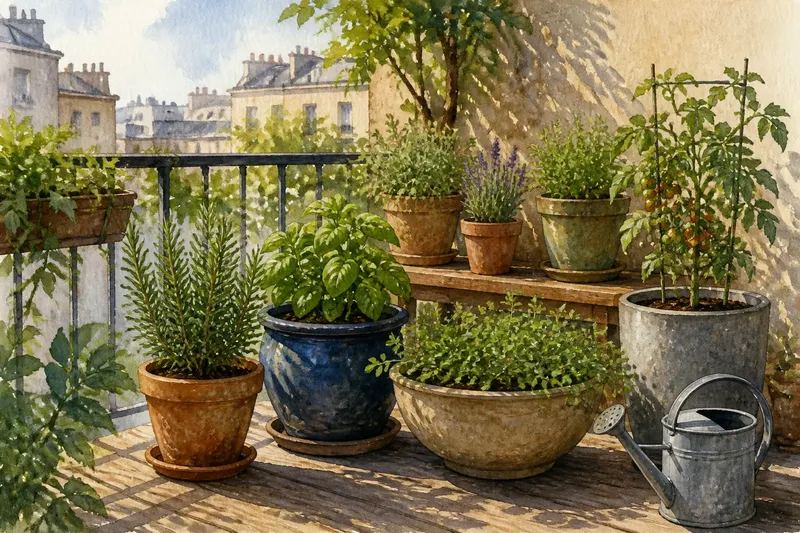
You water the basil before leaving for work, then find its pot dry again by late afternoon. A nearby parsley pot is still damp. The plants may be equally thirsty, but their containers hold different amounts of soil and expose that soil to different conditions. Container size is not just a question of fitting a plant onto a balcony; it helps set the small climate around its roots.
When comparing pots, look beyond the opening diameter. Volume, depth, shape, material, and exposure all affect how much root space is available and how quickly the growing medium changes after watering. Understanding those relationships makes it easier to choose a pot whose care rhythm suits both the plant and the place.
Container size sets the root environment
A plant’s roots need room to spread through the growing medium, absorb water and nutrients, and anchor the stems. A container limits that space at every side. In a small pot, roots reach the edges sooner, leaving less medium to store water and buffer changes in temperature. The plant may need more frequent attention, especially in sun or wind.
A larger pot contains more growing medium, which can provide a broader reserve of water and nutrients. That does not mean that the largest available container is automatically best. A young plant in a much larger volume may use water slowly, leaving the unused medium wet for longer. If the mix stays persistently damp, roots can struggle for air. The useful size is one that gives the plant room while allowing its roots to make use of the available medium.
Think of pot size as part of a relationship: the plant’s likely mature root system, the growing medium, and the conditions where the pot will sit. A leafy herb with a compact root system may be content in a modest container, while a fruiting plant that grows vigorously may need more room. Plant labels and reliable horticultural guidance can help establish the plant’s needs; the pot then has to fit those needs and the realities of the site.
Volume matters more than the rim alone
Two pots with similar openings can hold different amounts of soil. One may taper sharply toward its base; another may keep nearly the same width down its sides. A wide, shallow bowl can have a generous opening but little depth, while a tall, narrow pot may hold a similar volume in a very different shape. The rim alone is a poor measure of how much root space a plant will have.
When comparing containers in a shop, check the stated capacity if it is available. Otherwise, compare the interior width and depth, and notice whether the pot narrows toward the bottom. A tapered design can use less medium than its upper diameter suggests. If you already own a pot, a dry fill with a known container can help you judge its approximate capacity without relying on appearance.
Shape can matter as much as total volume. Some plants form roots that spread near the surface; others develop a deeper root system. A shallow pot may suit a plant with relatively shallow roots, while a deeper container can better accommodate a plant that needs vertical room. The plant’s growth habit is a better guide than a general rule that all containers should be deep or all should be broad.
Pot shape changes how water moves
After watering, gravity pulls moisture downward through the growing medium. In a tall container, water can move and collect differently from the way it does in a shallow one. The lower part may remain wetter while the surface dries, so a dry-looking top does not always tell you what is happening near the roots. A finger check a little below the surface, or a wooden skewer inserted gently into the medium, can offer a better clue than appearance alone.
Drainage holes are essential for most outdoor container planting because excess water needs a way to leave. Keep them clear, and use a potting mix suited to containers rather than dense garden soil. A layer of gravel at the bottom does not fix poor drainage; it takes up space and can leave the usable root zone shallower. If water remains in a saucer, empty it when the plant’s needs and the site call for free drainage.
A broad, shallow pot may dry more quickly because more of its surface is exposed to air and sun. A narrow pot may shade more of its medium, yet can still dry quickly if it is small or placed in a windy spot. These are tendencies, not fixed outcomes: the mix, material, plant cover, and exposure all contribute.
Material and placement tune the tiny climate
Unglazed terracotta allows moisture to evaporate through its walls, which can help a wet mix dry but may increase the need to check the pot in warm, exposed conditions. Glazed ceramic and many plastic pots lose less moisture through their sides. A fabric container allows air to pass through its walls and can dry noticeably in a breezy position. Each material changes the pace of moisture loss; none removes the need to observe the plant and soil.
Placement can intensify those differences. A dark pot against a sunlit wall may warm more than a light pot in a shaded corner. Wind passing across a balcony can draw moisture from leaves and soil. A pot tucked behind a railing or grouped with other containers may be more sheltered. For the same plant and pot, a change in exposure can alter how often the growing medium needs attention.
Say you have a compact rosemary plant and two possible containers: a small unglazed pot for a bright, windy ledge, or a somewhat roomier glazed pot in a sheltered corner. The first may dry faster and call for more frequent checks; the second may hold moisture longer. If the plant’s root needs fit both, choose by the care rhythm you can sustain and confirm conditions by checking the medium, rather than assuming one material is always superior.
Compare pots by the care rhythm they invite
Before planting, compare the containers using the same questions. This is especially useful when a small outdoor space has different pockets of sun, shade, and wind.
- How much usable volume does it hold? Consider interior width, depth, and taper, not just the rim.
- Does its shape suit the plant’s roots? Match depth and breadth to the plant’s expected growth rather than its size at purchase.
- Can excess water drain freely? Look for unobstructed drainage holes and a place for runoff to go.
- How quickly might the material lose moisture? Account for terracotta, glazed ceramic, plastic, or fabric walls.
- Where will the pot sit? Note sun, wind, wall reflections, and shelter from nearby structures.
- Can you lift and move it when filled? A large container may be hard to reposition, so settle its location before planting.
- Does its likely watering pace fit your routine? Choose a setup you can check consistently, especially during warm or windy spells.
Use the comparison to avoid two opposite mismatches: a cramped pot that dries before you can tend it, and an oversized, persistently wet pot that the plant cannot use well. If the right answer depends on the plant label, manufacturer instructions, or local rules, follow those directions.
What do gardeners ask about pot size?
How do I know if a container is too small?
Roots emerging from drainage holes, a plant that dries unusually fast, or growth that stalls can suggest the container is crowded, though each sign can have other causes. Check the root mass and growing medium before deciding to repot; a plant does not need a larger pot simply because it has grown taller.
Can a pot be too large?
Yes, particularly when a small root system occupies only a small part of a large volume of wet medium. The unused mix can stay damp for a long time, so drainage, watering, and the plant’s stage of growth matter alongside capacity.
Is a deeper pot always better?
No. Depth is useful when a plant needs vertical root room, but a broad-rooted plant may make better use of a wider shape. Compare the plant’s root habit with the container’s interior dimensions rather than choosing depth as a universal advantage.
Should I choose a pot based on the plant’s current size?
Consider how the plant is expected to grow, not only how it looks at the nursery. A reasonable amount of room for developing roots can reduce the need for an early move, while an excessively large pot can make moisture harder to manage.
Choose the pot for the place it will live
A container does not create one unchanging climate. Its volume provides a reserve; its shape directs root space and moisture movement; its material and position influence how quickly conditions shift. The best comparison is therefore not simply “small or large,” but “what will this pot ask of the plant and of me here?”
For balcony and windowsill gardening, that question keeps decisions practical. Match the plant’s root needs to the pot’s usable space, then account for sun, wind, drainage, and your ordinary schedule. Container size can shape the care rhythm, and choosing with that rhythm in mind is a useful way to make each pot feel better suited to its corner.